Yellow poplar root collar borer phenology project
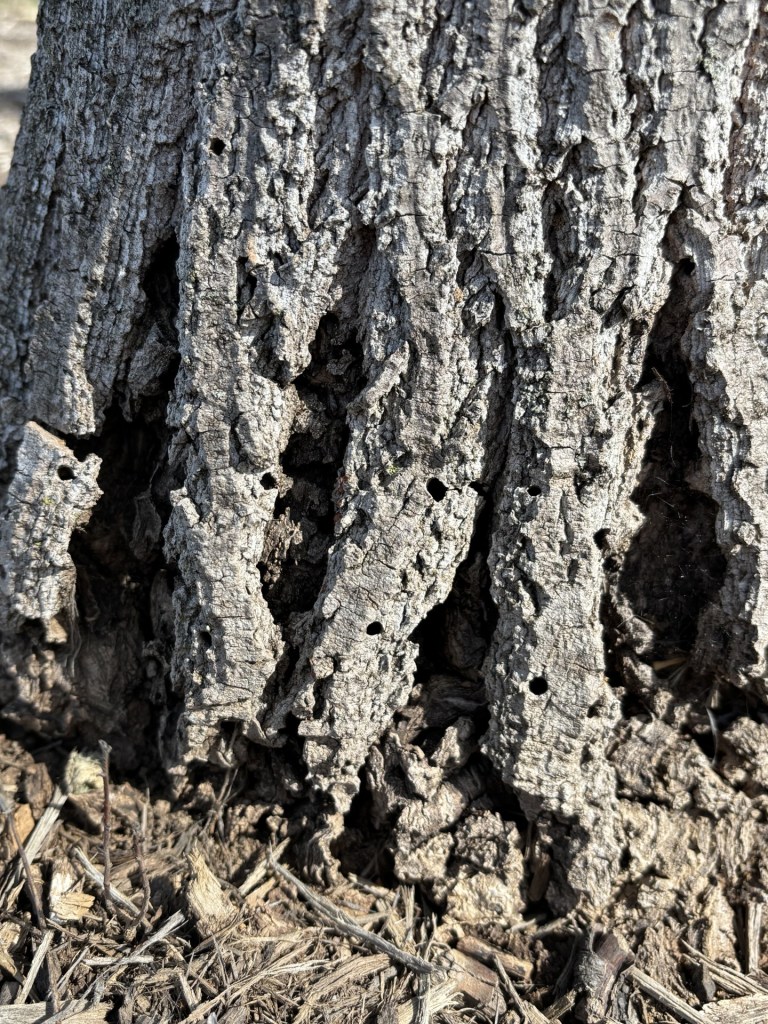
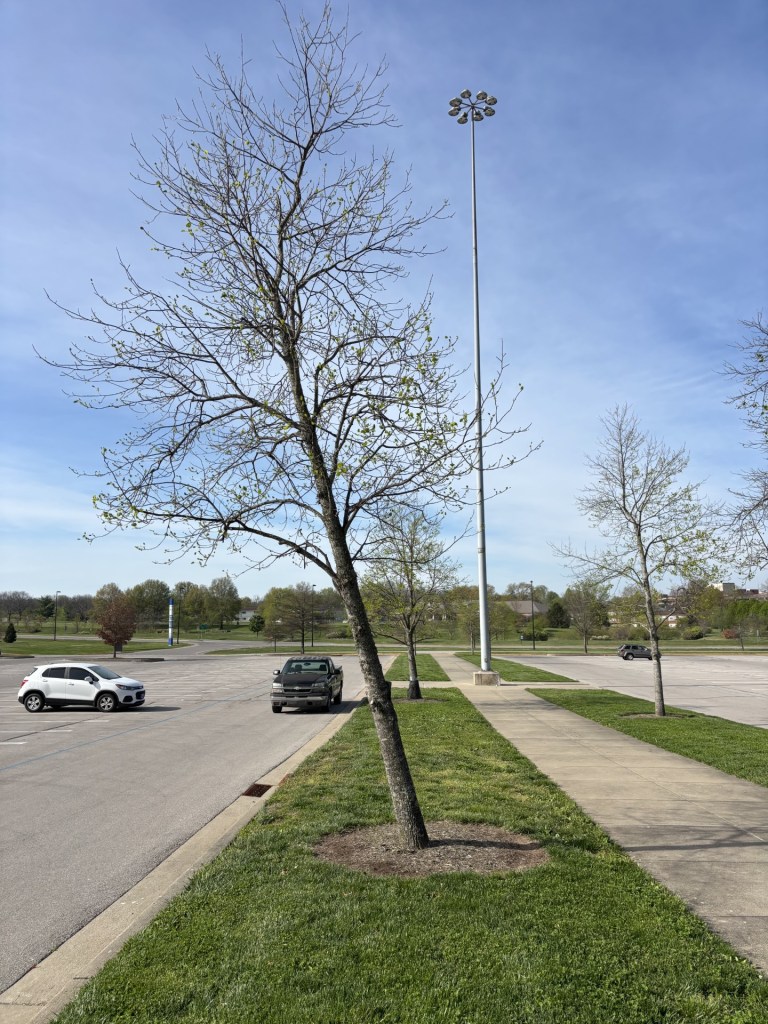
Left: Emergence holes from the base of a tulip tree where yellow polar root collar borer moths have emerged from. Right: A tulip tree that is leaning as a result of damage to the root collar from the borer.
This project is led by undergraduate student James Wang
Tulip tree, tulip poplar, or yellow poplar are common names referring to Liriodendron tulipifera. These deciduous trees have unique tulip-like flowers that bloom in April to early June. Leaves are 3-8 inches in length, distinctly four-lobed, and turn golden yellow and are shed during autumn. Tulip trees are the state trees of Indiana, Kentucky, and Tennessee and are found across their native range within the Eastern United States.
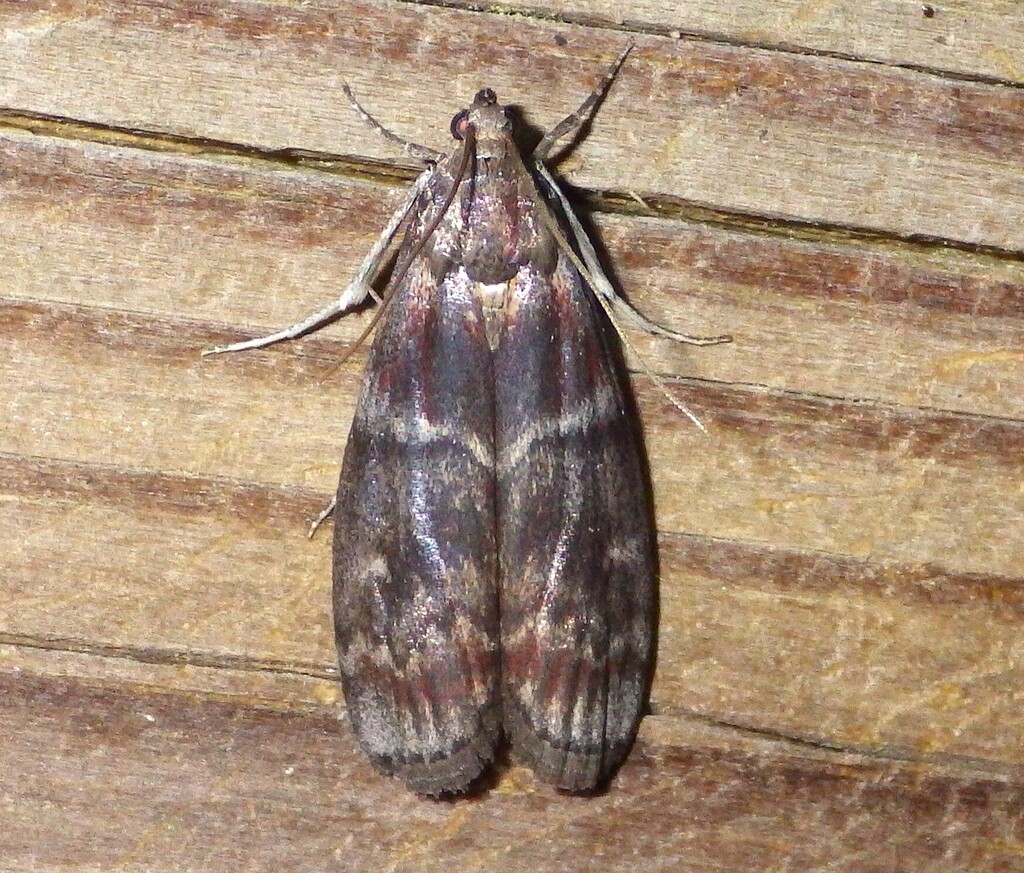
Above: an adult yellow poplar root collar borer moth. Photo by Ken Kneidel on iNaturalist.
This project aims to study the phenology (yearly activity patterns) of the tuliptree borer or yellow poplar root collar borer (Euzophera ostricolorella). Yellow poplar root collar borer (YPRCB) is the larva of a moth that bores into the base of tulip poplars, where the trunk widens into the structural roots in the soil. Larvae bore into the bark and create galleries, or tunnels, and feed on the phloem inside trees and excrete a dark frass, which is insect excrement. These tunnels may girdle young trees and act as entry points for pathogens or other organisms, such as carpenter ants. These tunnels, and subsequently weakened areas derived from borer damage, compromise the structural integrity of infested trees, posing a threat for tree failure and mortality . Adults are active in summer and autumn, with larvae pupating and overwintering as cocoons within their tunnels. Emergence times depend on temperature and multiple generations have been reported for warmer climates. As YPRCB pose a significant threat to tulip trees, especially heavy infestations or on young trees, it is important to determine when they are active to time insecticide treatments.
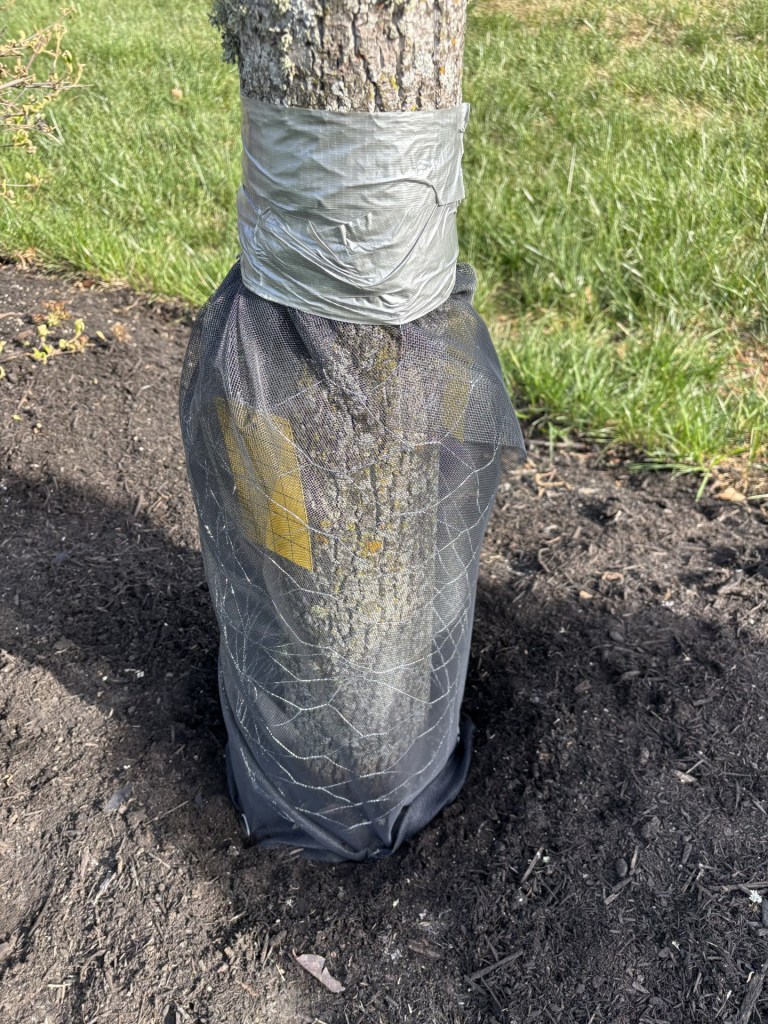
Above: Sticky cards within emergence cages are checked weekly to document when moths are active and emerging from tulip trees in central Kentucky
The Arboretum, State Botanical Garden of Kentucky and University of Kentucky Entomology Department are collaborating on this project and are monitoring YPRCB emergence from tulip trees in the Arboretum and on UK’s campus. Stressed trees are typically more attractive to wood-boring insects as certain pests can smell stress volatiles over long distances and more effectively locate hosts. Tulip trees may be more stressed in places such as roadways and sidewalks and parking lots. In these settings, the surrounding asphalt and concrete absorbs and re-radiates heat. This heat island effect leads to higher soil and air temperatures which increases transpiration rates in trees. Additionally, the soil in these environments is often compacted from foot traffic, construction, and lack of additional organic matter. Soil compaction reduces pore space, limiting air and water to tree roots and makes it harder for roots to push through denser material. The reduction in pore space inhibits water infiltration in the limited area where soil is exposed. Altogether, less resources and harsher conditions for trees within urban landscapes stresses trees, and may make tulip trees more susceptible to YPRCB. In this project we are monitoring emergence of YPRCB adults, and damage caused by larvae to tulip trees in more stressful settings such as parking lots, compared to more ideal settings such as the arboretum. We hypothesize that moths emerge earlier, and resultant damage is more severe, in tulip trees in stressful settings such as parking lots or roadsides.

