Current projects:
Phenology and management of Annual Bluegrass Weevil in the upper south.
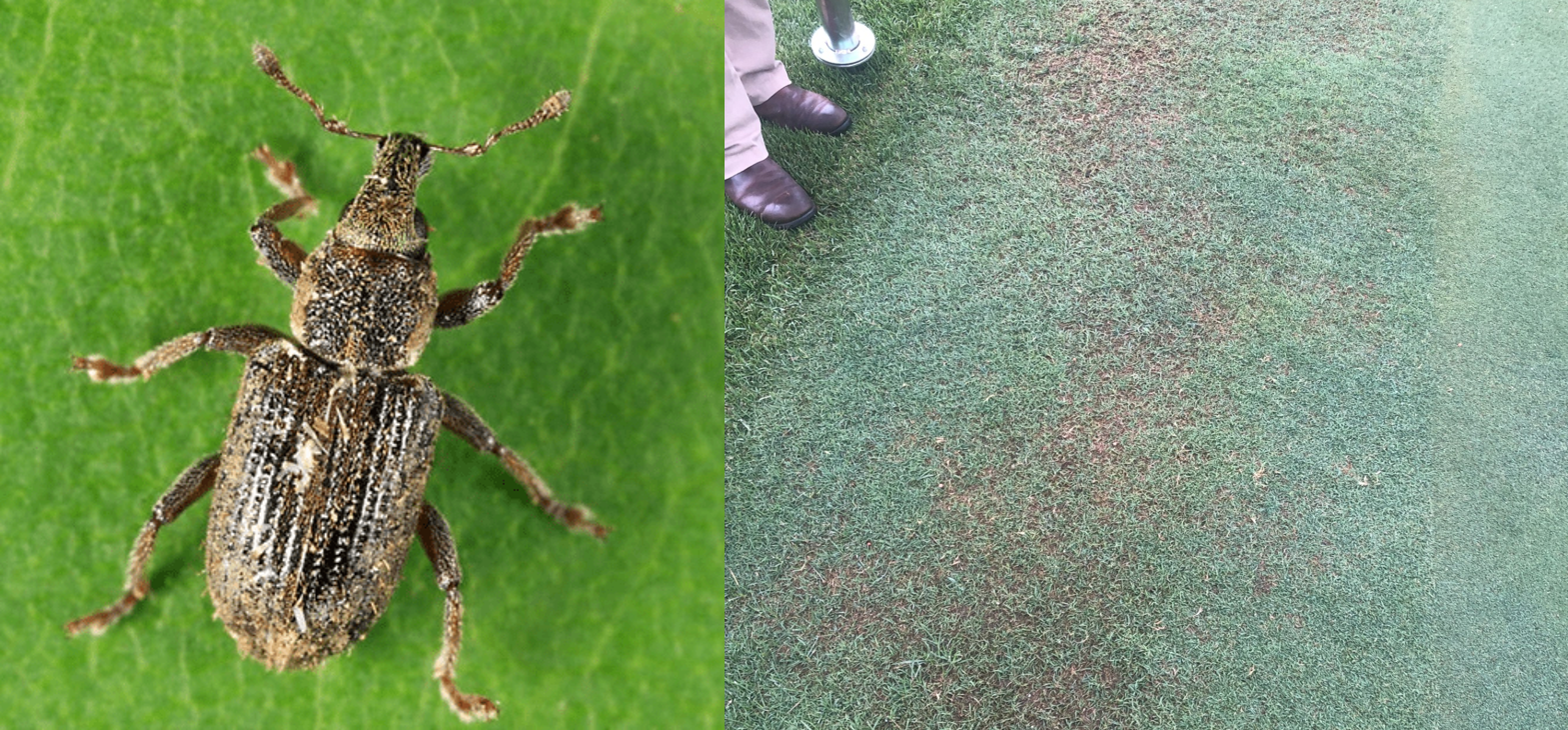
This project will be led by incoming graduate student Grace Ferry and is supported by the Kentuckiana Golf Course Superintendents Association (KGCSA).
Annual Bluegrass Weevil is a newly arrived pest in Kentucky that damages grass in golf course fairways, greens, collars, and approaches. ABW feeds on annual bluegrass and creeping bentgrass, both of which are common in golf courses in Kentucky. Managing ABW requires precise timing to target overwintered adults with insecticides as they disperse into short-mown turf to feed in spring. Sprays to target late instar larvae also require precise timing to contact larvae when they leave stems to feed on crowns at the thatch-soil interface. We are studying ABW phenology and overwintering habitat across its range in central Kentucky. Our goal is to develop growing degree day guidelines for golf course personnel in Kentucky and to better characterize ABW biology in the upper south. Characterizing ABW phenology in the south will improve treatment efficacy and reduce the number of pesticide applications needed for sufficient control. We will additionally investigate alternative pesticide application practices to reduce overall product use while increasing efficacy of treatments.
Ability of urban forest fragments support natural enemy spillover in adjacent landscapes.
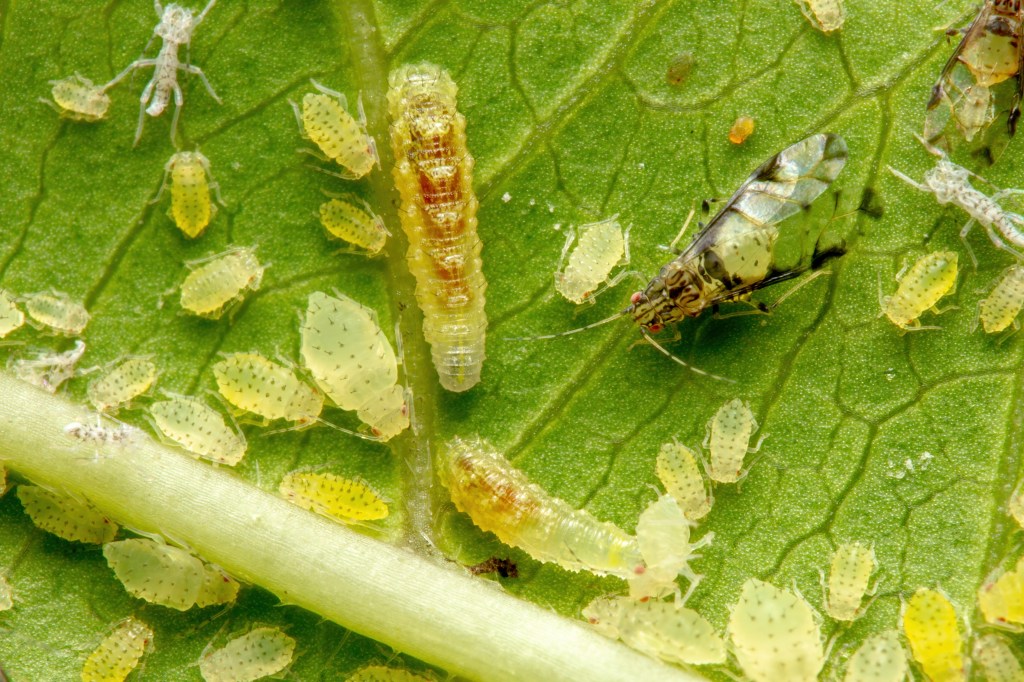
This project is a collaborative project between the Wilson lab and Dr. Kenton Sena from the University of Kentucky Lewis Honors College. This project is led by two undergraduate students: Zoe McComas and Zachary McComas.
Reforest the Bluegrass is a world-class urban reforestation program run by the Lexington-Fayette Urban County Government (LFUCG). Every year since 1999, LFUCG has planted a new forest patch somewhere in Lexington, KY, yielding a 25-year chronosequence of planted forests in an urban landscape. This study examines 1) if older forest fragments host greater natural enemy diversity and abundance relative to newer fragments 2) if forest fragments support natural enemy spillover into adjacent landscapes, and 3) if spillover effects are influenced by forest age.
Scale insect projects:
Scale insects are difficult to manage pests in urban trees and conventional management approaches with insecticides have variable efficacy. We have several ongoing projects that seek to develop IPM tactics to sustainably manage scales and conserve beneficial insects in landscape trees.
Use of flowering plants to support scale insect biological control.
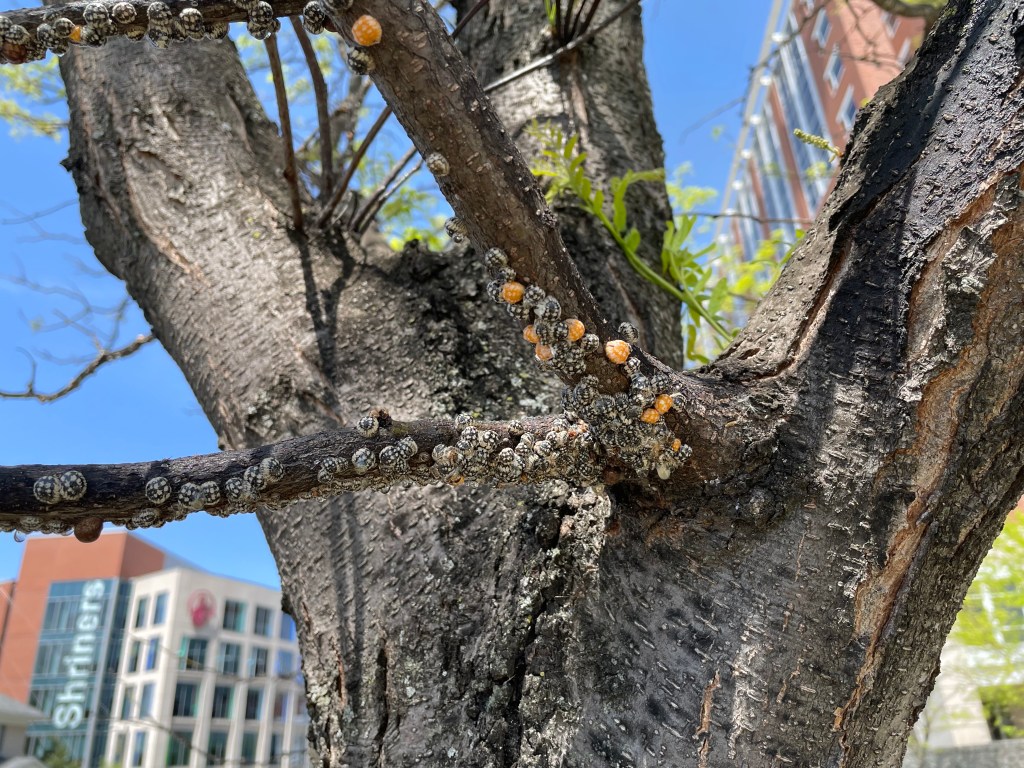
This project is led by graduate student and lab manager Zoë York.
There are many parasitoids and predatory arthropods (referred to as “natural enemies”) that kill scale insects, but limited research has examined how scale biological control can be enhanced in urban trees. Arthropod natural enemies feed on pollen and nectar as supplemental resources and adding flowering plants near scale-infested trees might support natural enemy populations, and resultant spillover biocontrol in tree canopies. In this project we are evaluating the efficacy of planting flowering plants near scale infested trees as a means of supporting the activity of arthropod natural enemies and their biological control services.
Action thresholds for managing scale insects in landscape trees.
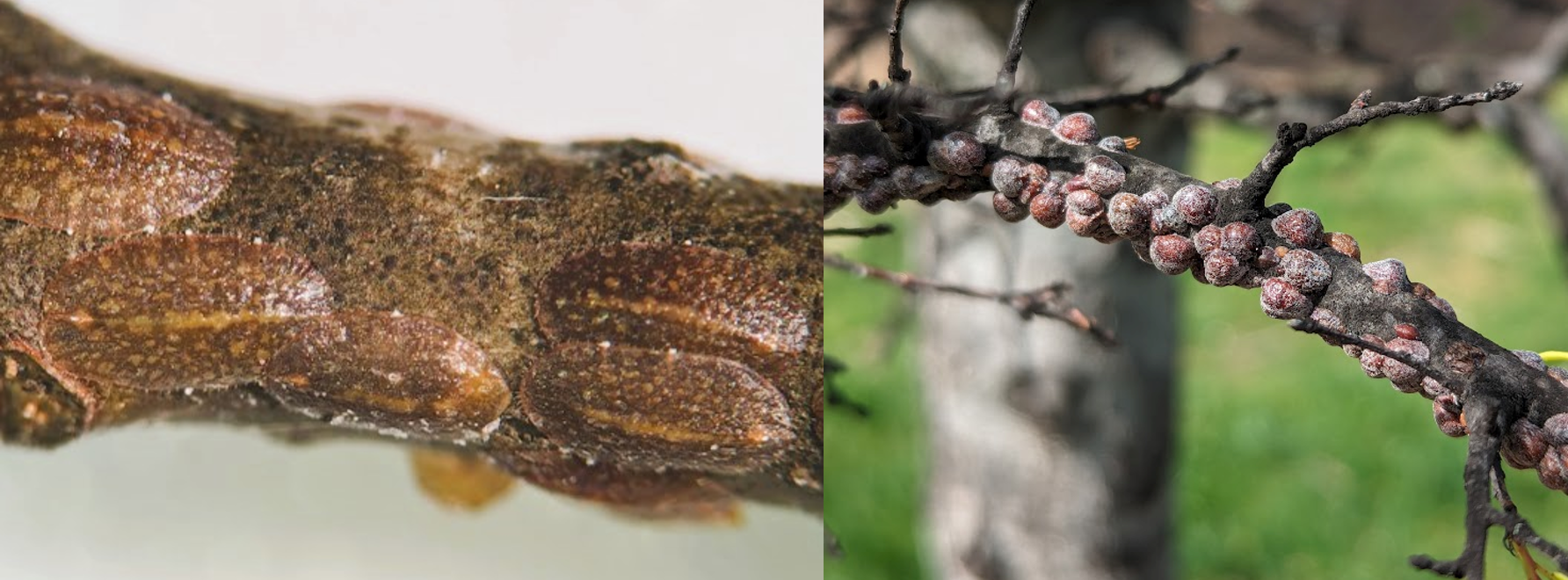
This project is led by graduate student Ben Knowlton.
Urban trees can tolerate some level of scale infestation without declining in health, but there exist no guidelines to inform arborists on when these thresholds have been surpassed. Additionally, scales support natural enemies and biological control in nearby plants, which indicates that they should only be managed when they are worsening tree health. In this project we are quantifying how tree condition and natural enemy communities change as a function of scale densities. From this project we will develop scouting tools that arborists can use to quickly estimate scale densities and decide if an intervention is needed to support tree health.
Managing soft-scales through ant exclusion.
This project is led by graduate student Zoë York and is supported by the TREE Fund.
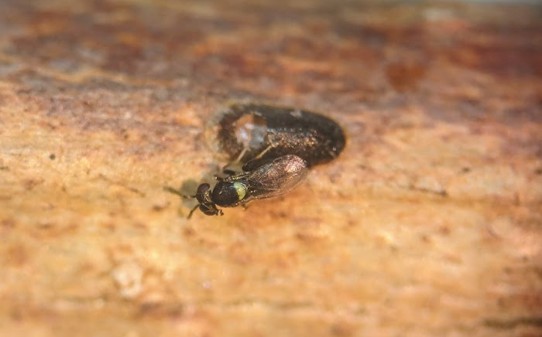
Ants feed on the honeydew that soft scales excrete while feeding. In return, ants protect scales from natural enemies that would otherwise regulate their populations. Previous studies conducted at UKY have found that physical exclusion of ants from tree canopies increases scale biological control. However, such tactics are labor intensive, messy, disruptive to aesthetics, and are hazardous to wildlife. In this project we are testing if a small amount of pesticides applied at the base of tree trunks once or twice early in the summer can effectively reduce ant antagonism of natural enemies and increase scale biocontrol. If effective, this tactic would use far less insecticides than conventional scale insect treatments, would limit mortality to beneficial insects, and would support natural enemy communities in landscape trees.
Emerald ash borer projects:
Emerald ash borer (EAB) is the most devastating invasive forest pest to have invaded the United States. Current projects conducted in Michigan and Kentucky seek to improve management of this pest while documenting its impact on forests and urban landscapes.
Influence of forest age on EAB infestation prevalence.
This project is led by two undergraduate students: Zoe McComas and Zachary McComas and was done in collaboration with Kenton Sena in the Lewis Honors College. This project was funded by a UK sustainability fellowship to Zoe McComas.
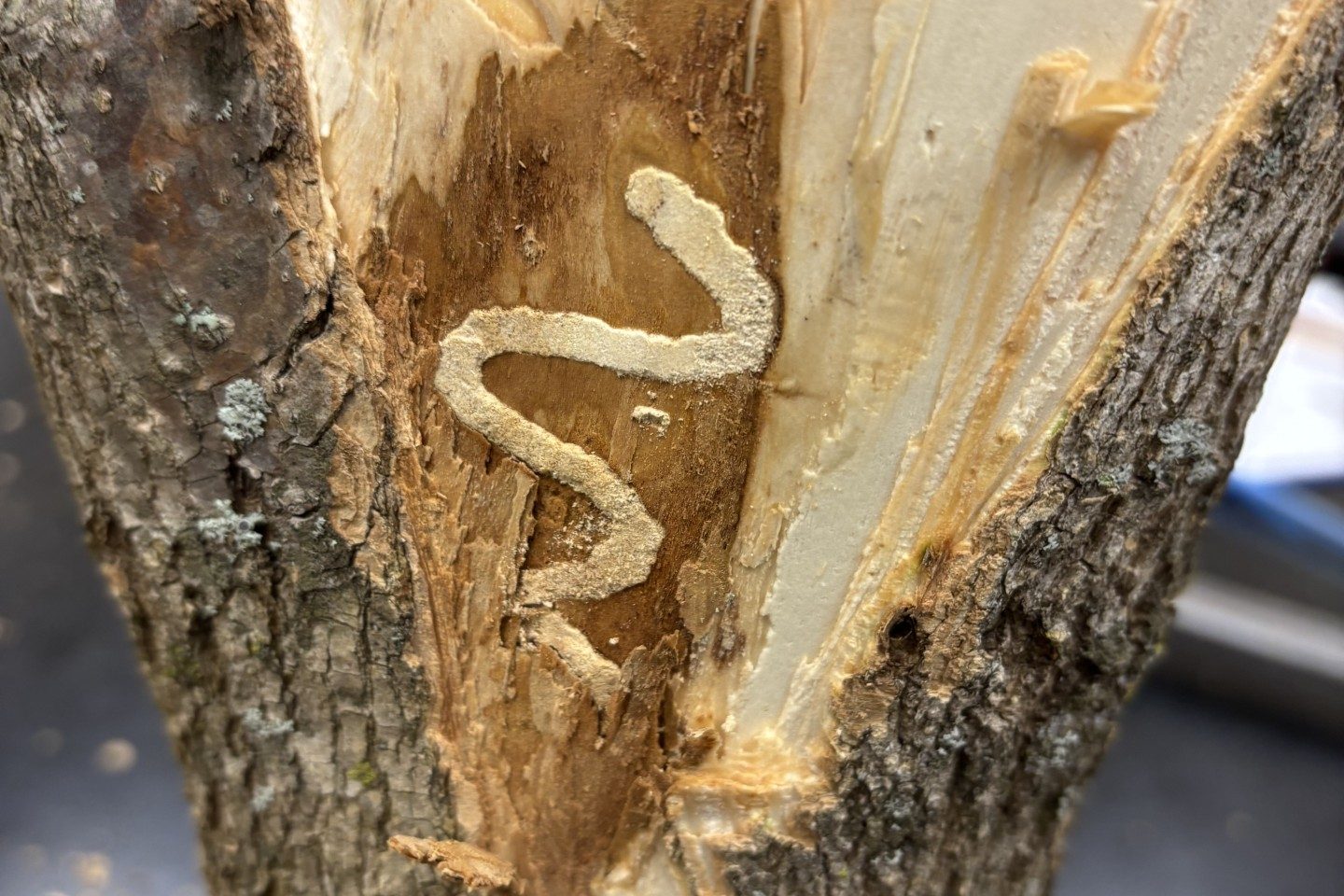
The Reforest the Bluegrass Program in Lexington has created a 20+ year chronosequence of small forest fragments. Ash is common in many of these fragments, and many fragments were planted with ash prior to EAB’s arrival in Kentucky. In this project we surveyed 20 forest fragments spanning planting years from 1999 to 2019 and measured ash density, regeneration, and mortality as a function of forest age. We documented substantial ash mortality and few remaining overstory trees, although ash was not completely extirpated from most sites where it was previously planted. Analyses for this project are still ongoing.
Do releases of exotic parasitoids synergize with chemical control of EAB?
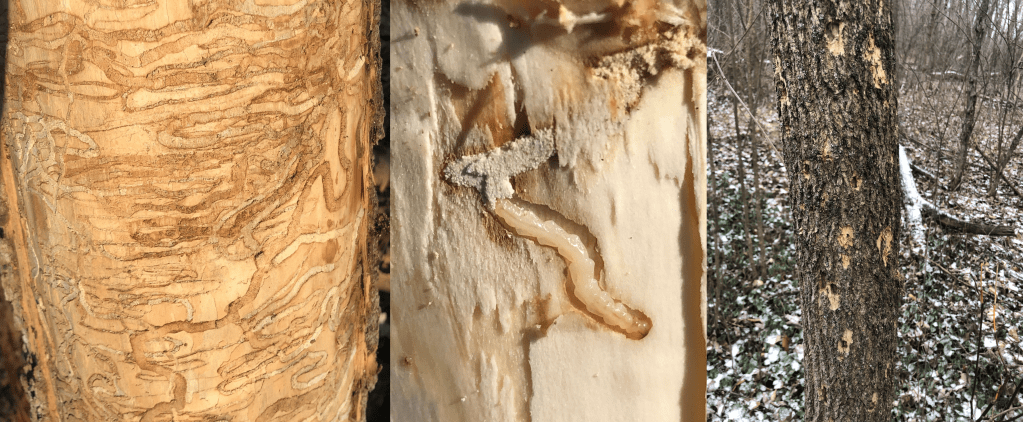
Thus far, four exotic parasitoid wasp species have been introduced to manage EAB. The systemic insecticide emamectin benzoate is effective at managing EAB and can protect trees for 2-3 years, but it is unknown if insecticide treatments synergize with parasitoid releases to better manage EAB. If effective, foresters could treat a proportion of trees within a stand in spring to kill larvae in some trees, while parasitoids emerging later in the season would focus their efforts on untreated trees to overall exert greater population reduction. Emamectin benzoate stays within the leaves of treated trees which will also kill adult EAB that feed on these leaves after emerging from untreated trees, further reducing EAB populations.
In this project we are examining the combined effect of parasitoid releases and emamectin benzoate treatments on emerald ash borer populations in post-invasion forests in central Michigan. This is an in-progress multi-year project with collaborators at Michigan State University and the US Forest Service.
Completed projects:
Ash regeneration in post-invasion forests.
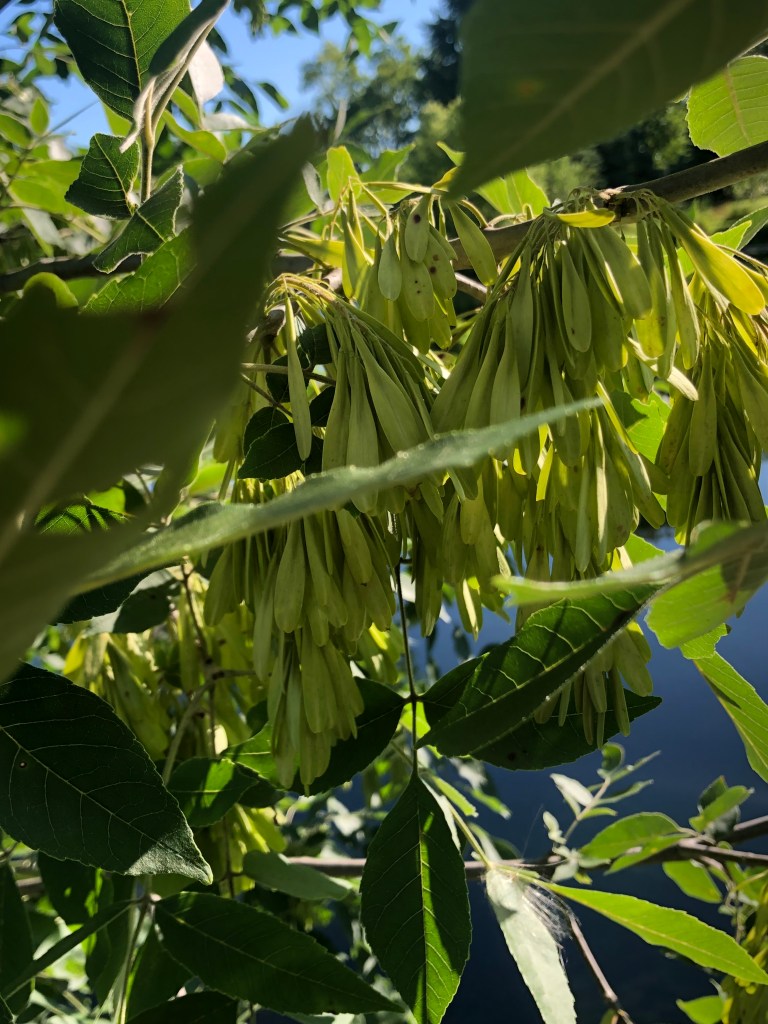
EAB has been in North America since the late 90’s and has killed millions of ash trees across its invaded range. However not all ash species are affected similarly. We measured the regeneration of white and green ash in forests that had been invaded by EAB for approximately 20 years and found substantial regeneration in all forest strata. While species such as black and green ash are heavily reduced where EAB invades, species like white and blue ash show considerable ability to regenerate despite high mortality of mature trees.
Click here to read this study.
Click here for a summary article about this study.
How does tree diversity and ash density affect biological control of emerald ash borer in post-invasion forests?
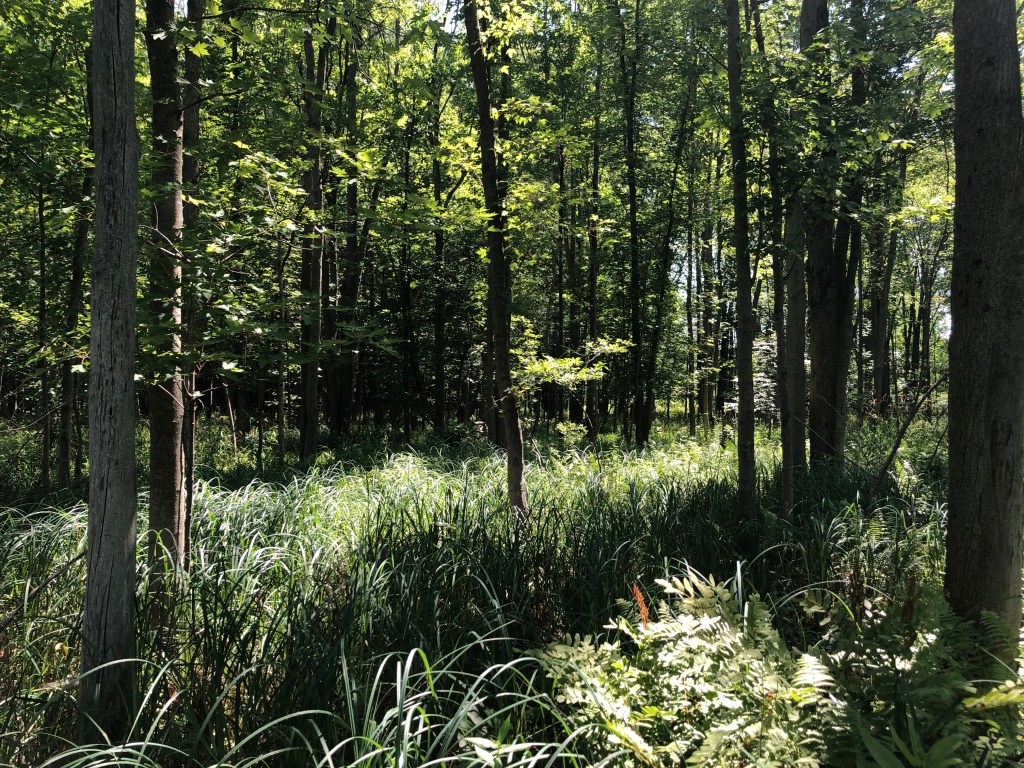
A maple and ash dominated forest in central Michigan
Trees surrounded by many different species often host low pest densities and receive less herbivory from insect pests. One hypothesis – the enemies hypothesis – states that where there are more plant species there are a greater diversity of resources that can support natural enemy communities. These resources include food (nectar, pollen, alternative prey), shelter, ideal microclimate conditions, and nesting habitat.
We examined how tree diversity and ash density influenced EAB, ash tree health, and the parasitoids and woodpeckers that prey on EAB. We found that the density of ash, rather than the diversity of tree species, differentially influenced EAB parasitism by parasitoid wasps but this effect was not associated with improved canopy condition. It does not appear that the diversity of tree species found within post-invasion stands influences EAB biological control or ash health. However, the exotic wasp Spathius galinae appears to parasitize a higher proportion of EAB larvae in forest stands with high ash density. Thus, releases of exotic species like S. galinae may be best suited to forest stands with high ash density.
Click here for a short summary article about the study.
How does tree diversity and tree density influence biological control of urban tree pests?
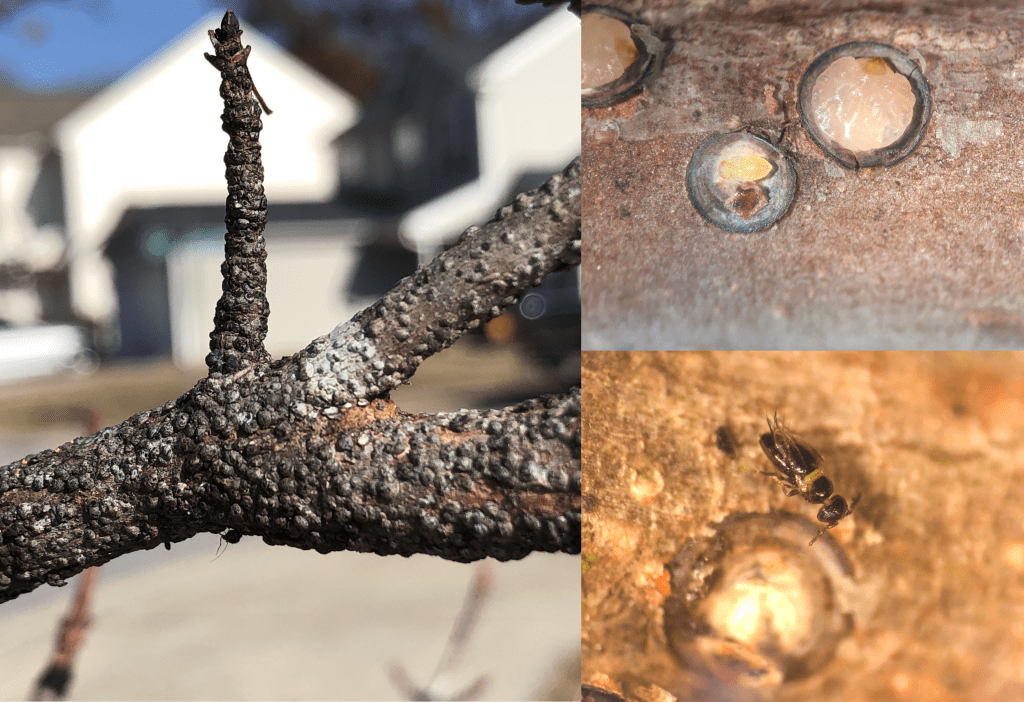
Urban tree plantings are often represented by a common pool of species. However, diverse tree plantings may host a greater array of resources (as predicted by the enemies hypothesis) that could support natural enemy communities and their biological control services in urban landscapes.
Gloomy scale is a native insect that feeds on many different tree species and causes minimal damage in rural settings. However gloomy scale it is a problematic pest on urban red maples due to the urban heat island effect. Warmer temperature in cities increase the fecundity of gloomy scales which allows them to reach high densities on urban red maples. Diverse tree plantings could offset this effect by supporting natural enemies that parasitize or eat gloomy scales. In this project we examined the effect that tree diversity had on gloomy scales, their parasitoids, and the generalist predators found in red maples in Raleigh, North Carolina. Below you can find the link to the full publication. (Journal link) (pdf)
Here is a short article that summarizes the findings from this project:
Are Trees in Species-Rich Urban Plantings Less Susceptible to Pest Damage? (entomologytoday.org)
Can urban tree pests support conservation biological control in shrubs below them?
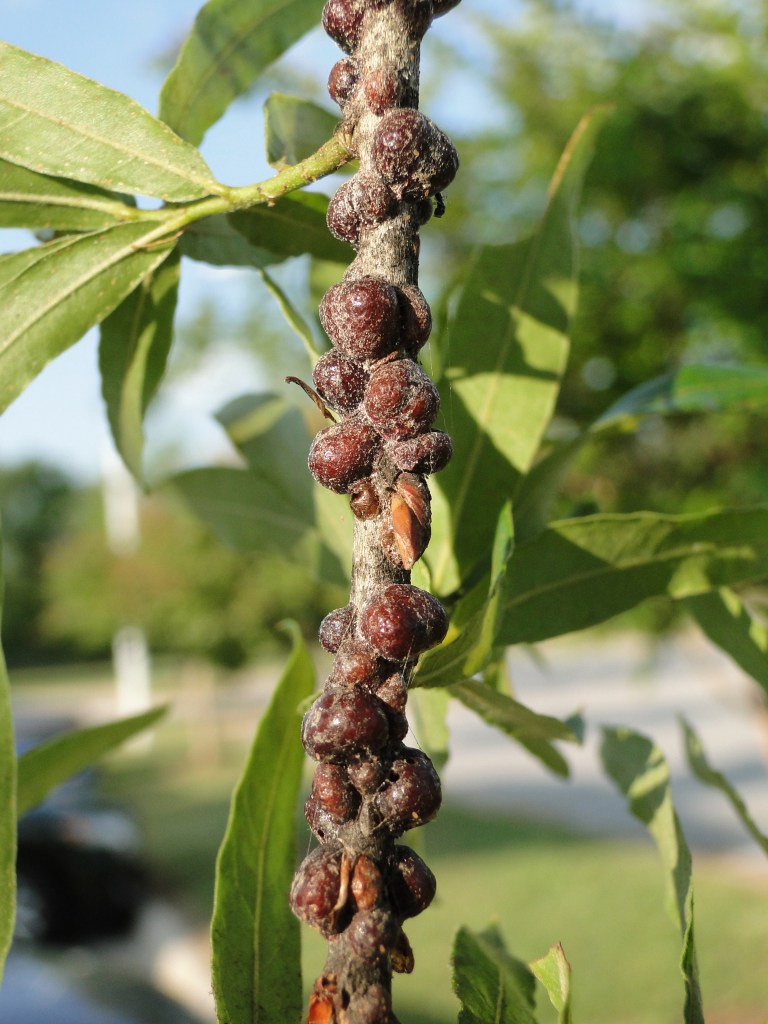
Scale insects can be problematic pests on landscape trees in intensively urbanized locations. However, trees in moderately developed locations with some surrounding vegetation cover such as parks or yards are able to tolerate moderate scale densities.
This is important because scales are eaten by many arthropod predators and parasitized by many parasitoid wasp species. By supporting natural enemy communities, scale insects may also enhance biological control of other tree pests in urban landscapes. In this project we examined the ability of scale insects to support natural enemy communities in urban trees and in shrubs planted below them. We found that scale-infested trees hosted more natural enemies than scale-uninfested trees and that shrubs below scale-infested trees hosted more natural enemies than shrubs below scale-uninfested trees.
Below you can find the link to the publication:
Wilson, C.J. and Frank, S.D., 2022. Scale Insects Support Natural Enemies in Both Landscape Trees and Shrubs Below Them. Environmental Entomology. (Journal link) (pdf)
If you’d like a straightforward summary of the findings in this paper check out this article from EntomologyToday.org
We did two follow-up studies in this system. The first examined if scale-infested trees support greater biological control services in shrubs planted below them relative to scale-uninfested trees. We found that sentinel prey caterpillars and fruit flies were more likely to be removed from holly shrubs underneath scale-infested relative to uninfested trees, but that this effect depends prey species and shrub species.
Wilson, C.J. and Frank, S.D., 2023. Urban tree pests can support biological control services in landscape shrubs. BioControl. (Journal link) (pdf)
In the second follow-up project we examined the spider communities found in scale-infested and uninfested trees and in shrubs below these trees to determine which spider guilds were supported by scale-infested trees.
Wilson, C.J. and Frank, S.D. 2023. Scale insects contribute to spider conservation in urban trees and shrubs. Journal of Insect Conservation. (Journal link) (pdf)
For a quick summary of both of these papers see the following blog post on Entomology Today
How do floral resources & urbanization influence wild bee communities?
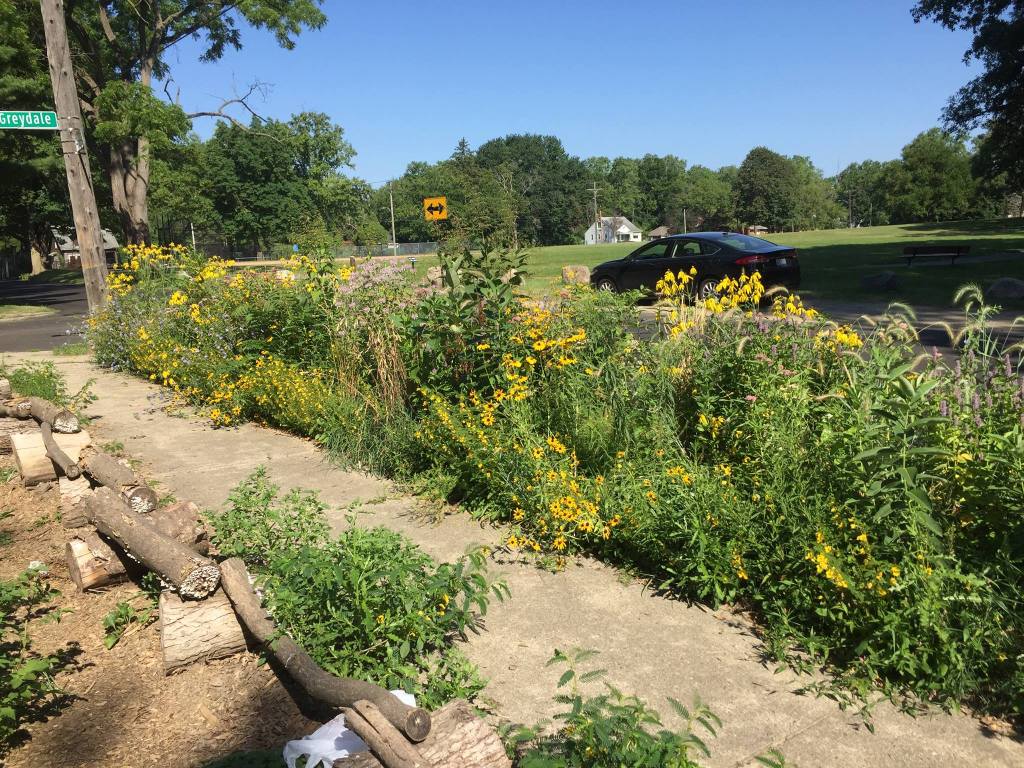
Urban areas are expanding globally and urbanization can negatively affect important insect taxa such as wild bees. Urban farms are also becoming more prevalent in many cities within the United States and benefit from the pollination services that bees provide. We studied the effect that urbanization and floral resources had on wild bee communities in the metro-Detroit area in southeast Michigan.
Publications from this project:
Wilson, C.J., and Jamieson M.A 2019. The effects of urbanization on bee communities depends on floral resource availability and bee functional traits. PLOS One. 14(12). e0225852-e0225852. doi: 10.1371/journal.pone.0225852. (pdf)
Fitch G.*, Wilson, C.J.*, Glaum, P., Vaidya, C., Carolina-Simao, M., Jamieson, M.A 2019. Does urbanization favour exotic bee species? Implications for the conservation of native bees in cities. Biology Letters. 15: 20190574. doi: 10.1098/rsbl.2019.0574: (pdf)
Jamieson, M.A., Carper, A.L., Wilson C.J., Scott, V., Gibbs, J. 2019. Geographic biases in bee research limits understanding of species distribution and response to anthropogenic disturbance. Frontiers in Ecology and Evolution. 7, p.194. doi: 10.3389/fevo.2019.00194. (pdf)
 Caleb J. Wilson